
Please note: The following material is provided for conference attendees only and is not to be shared. Thank you for respecting the IP of kidlit creators, whose income comes primarily from workshopping material like this. It will be available here for two weeks until 8 May 2023.
All great stories, whether true, made up or floating somewhere in between have a beginning. A launching off point that (should) propel the reader or listener straight into the guts of the narrative so convincingly that they instantly forget the world they’ve just left behind for the one they now find themselves sharing with other characters too amazing not to believe. But how do young story tellers – and I’m using that term in preference to ‘writer’ as there are many ways to relay a story – make that first leap? From where do they garner their ideas and harness their creativity? Is it as simple as turning on the imagination tap?
For my condensed contribution to being a terrific storyteller, I focused on the answer to an author’s most often asked question: Where do you get your ideas from? Here are some slides and revelations I use in the classroom to illustrate that the best ideas begin with living them in the first place.
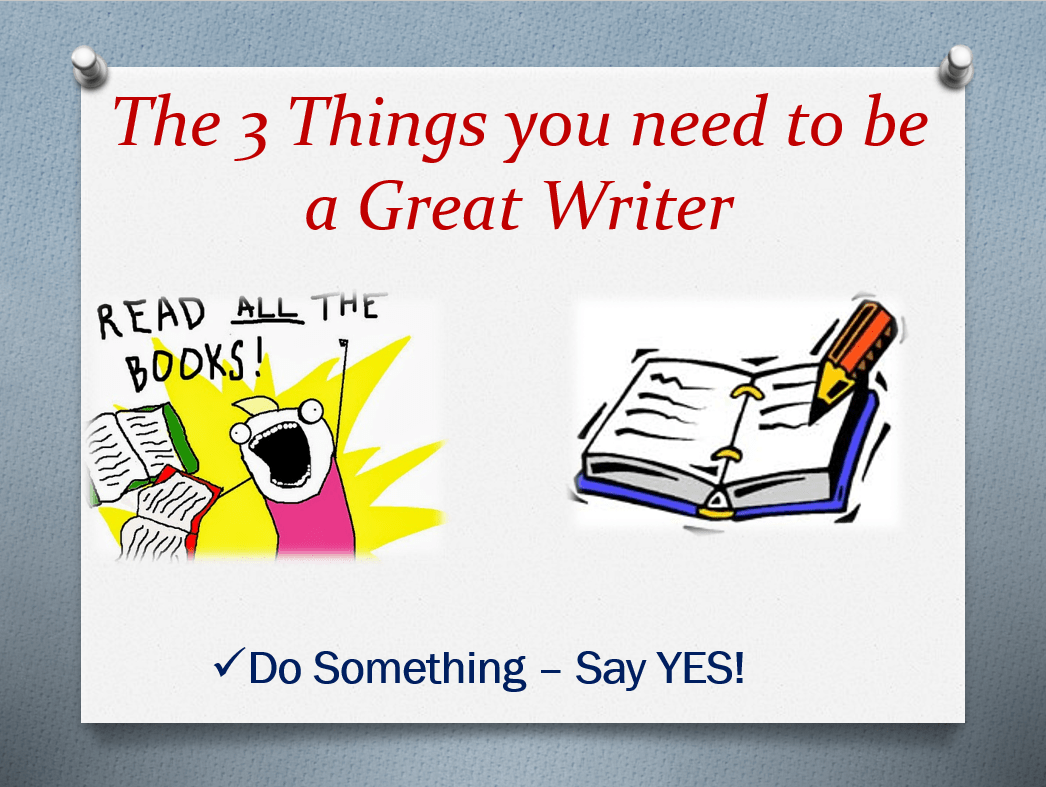
The general motto for idea generation in my book is; Relax. Prime. Collect! Rather than focus on the elements of writing, I encourage young scribes to enjoy the fundamental art of story by getting a feel for it from simply reading. Or watching a movie, or soaking up a comic strip or going to a live musical.
Then, like any skill set, the way to improve is to practise. Practise. Practise. In other words: write, something, everyday, even if only your passing thoughts.
But perhaps most important and unexpected notion of all is actually living life as a way to collect ideas. In other words to do something and say yes to new, daunting, or unusual experiences. N.B. Jumping off tall buildings without a parachute and or adult supervision is not encouraged!
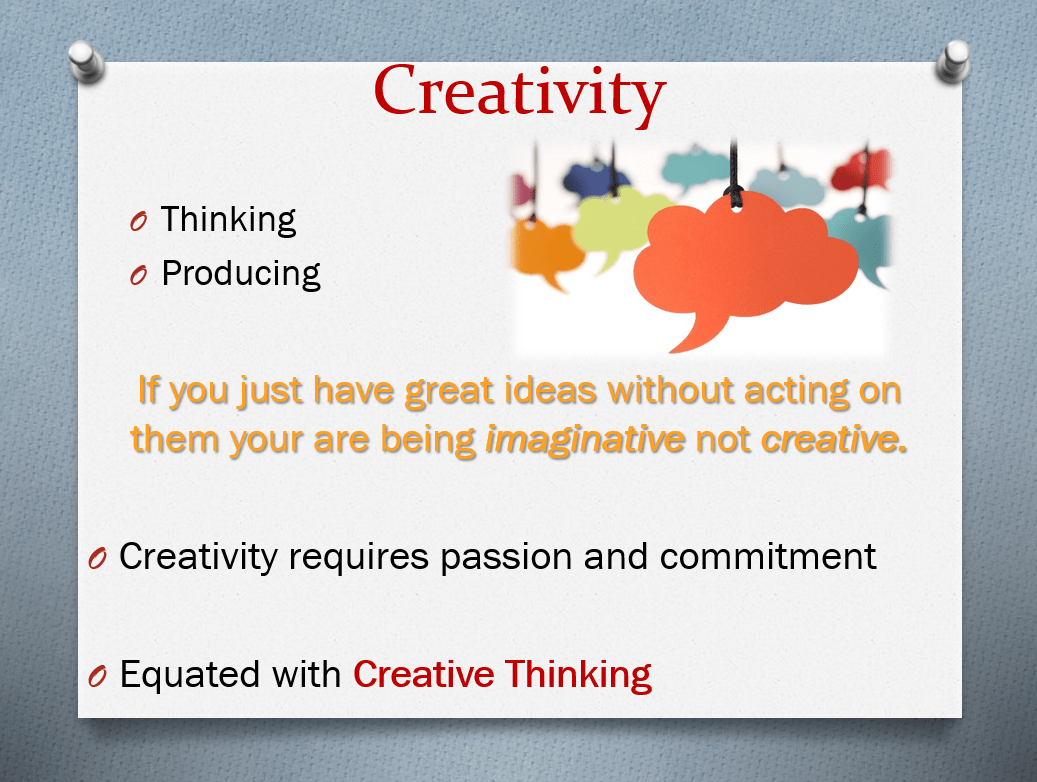
Ideas may be transformed and augmented with imagination but without some purposeful creative input, having great ideas alone is not being creative. We have to make something of and from them. This is where the work begins and a little extra thought is required. Ways to bolster creativity are listed below.

Take time to explore the real meaning and benefits of each of these points, for instance ‘looking at the big picture’ is an exercise in perception and the ability to appreciate a situation or idea from different viewpoints. A very real attribute to improved creativity is the ability to turn off; daydream as it were! Kids love it when you give them permission to daydream. Authors often spend vast periods of time mulling over possibilities, listening to the story unfold in their heads, and getting to know their characters before committing a single word to paper. At least I do. The benefits of being still and present and relaxed are as great as those found from ‘doing something’.

But where do those ideas come from in the first place? Well remember all that life you’ve experienced? I liken it to filling up what I call my big memory treasure chest. Some kids called it a Wardrobe, a la The Witch and The Wardrobe. Whatever the place you choose to stow these precious memories and experiences it is important to realise that it is infinite and the true source of ‘imagination’. I like to break the word, imagination down into: image + nation. Image representing all those experiences, tastes, sensations, emotions, places, things you’ve heard etc. that you’ve ever had. Nation symbolising where those experiences took place. It is from this treasure chest that you can now dip into for inspiration and ideas.

To evaluate this notion in real life, I introduce the concept of observation and its potency for the storyteller. Without this powerful tool, we are simply generalising perceptions and giving overviews. Details matter. Details create authenticity and believability. Imagine walking down a suburban street. A boxed hedge runs along several of the house frontages. It is uniform, mostly green, straight edged and generally uninspiring. Now imagine stopping and peering more closely. Use your magic magnifying glass. What might you see? Are there living creatures among the foliage? How do the leaves appear: healthy, torn, discoloured? What could all this mean; for the occupants of the house, the passerby, the animals that call the hedge home? Learning how to observe and recognise detail enables storytellers to describe and relay characters’ thoughts and feelings and situations more effectively and convincingly. Details matter.

Now get students to explore the notion of What if ..? another powerful tool to spark creativity and allow the imagination to now take over. It is often the alchemy of creativity and wild what ifs that produces the best nuggets of a compelling storyline. What if …? is a get-out-jail-card. A key that unlocks a plethora of possibilities allowing the stumped storyteller to explore new directions and unleash some serious creative verve. The more What if …? scenarios a student can list, the more whacky they are likely to become and the better the foundation for fantastic story telling. Most students eagerly embrace this challenge.

If students struggle to generate what if scenarios or are not natural story tellers, a fun all encompassing exercise is this Idea Generator. By removing the urgency of ‘coming up with an idea’ and concentrating on this game instead, a more relaxed approach is attained to get the creative juices flowing. And because everyone has a birthday, anyone can participate. Click on the image below to download the Generating Ideas Worksheet. Idea prompts may be altered to suit personal suggestions, again this can be group inclusive. If just five What if …? scenarios were listed for each prompt, well … you do the maths. I’m just a writer! Have fun and write on!

Generating Ideas / What If? worksheet

Come visit and explore!

My Stories


You must be logged in to post a comment.